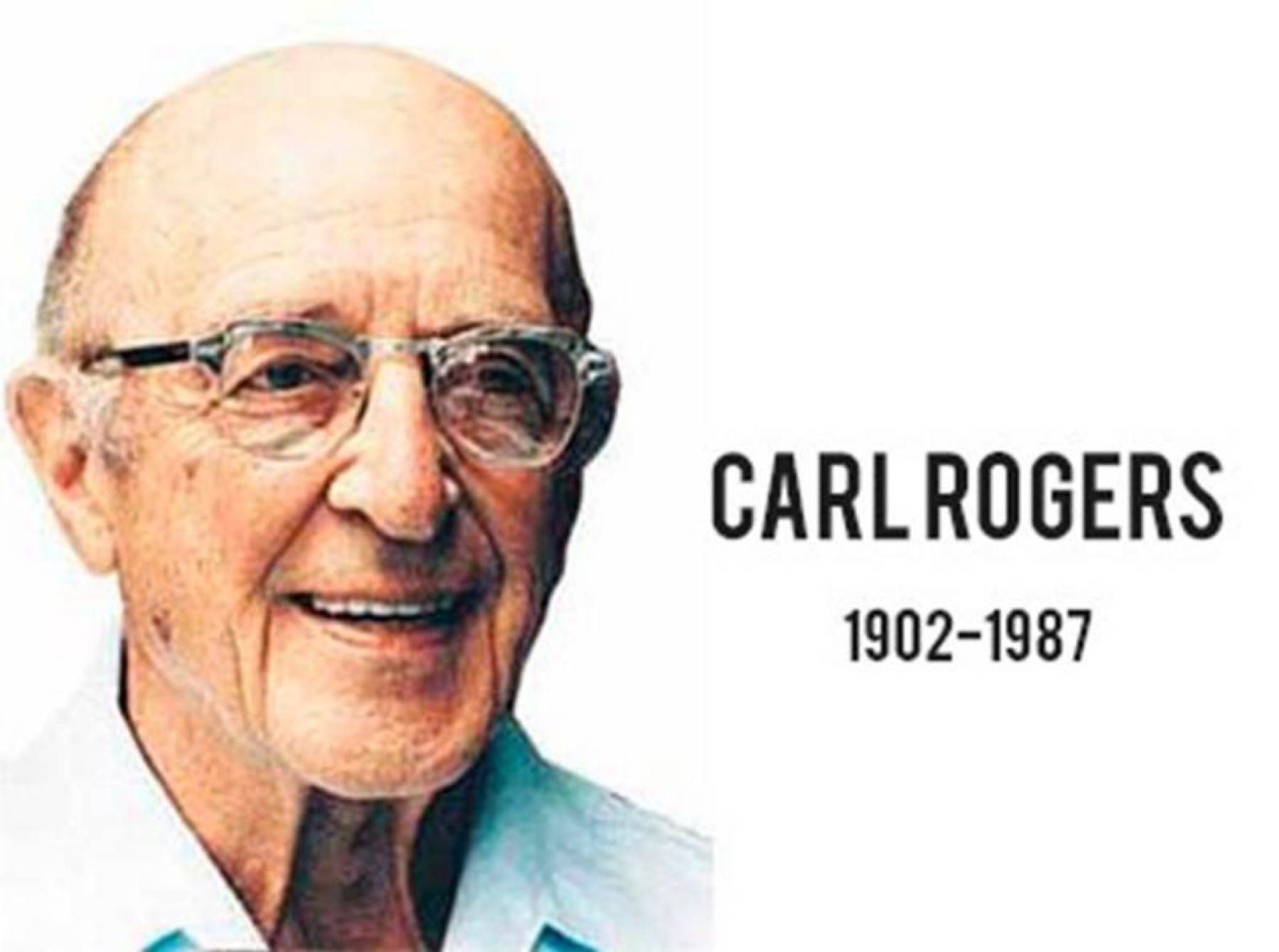
Carl Rogers did not write about clinician burnout. The concept did not exist when person-centered therapy was developed. What did exist was a therapeutic philosophy that clearly located responsibility for change with the client rather than the clinician (Rogers, 1957; Rogers, 1961).
That philosophical positioning matters.
Person-centered therapy is defined by unconditional positive regard. At its core, unconditional positive regard refers to a nonjudgmental stance toward the client’s internal experience, independent of agreement with behavior or outcomes (Rogers, 1957). This stance does not require the clinician to assume responsibility for a client’s choices, actions, or life direction.
From a burnout perspective, this separation is protective.
Research on clinician burnout consistently shows that clinicians are more vulnerable to emotional exhaustion and disengagement when they define professional effectiveness by client outcomes or take personal responsibility for change that lies outside their role (Salyers et al., 2017). In contrast, clinicians who maintain clear role boundaries and derive fulfillment from performing their professional role appropriately, rather than from producing specific results, report lower burnout and greater professional longevity.
In the burnout literature, this protective pattern is often described using the term compassion satisfaction (Stamm, 2010). Despite its name, compassion satisfaction does not refer to pleasure or gratification derived from client success. It refers to the steadiness that comes from role clarity. Clinicians remain engaged in their work without carrying responsibility for clients’ lives, decisions, or outcomes.
Although Rogers did not study burnout directly, the alignment is clear. Person-centered therapy structurally separates understanding from ownership. The clinician provides conditions. Change, when it occurs, is attributed to the client (Rogers, 1961). This mirrors what burnout research later identified as protective for clinicians.
Acknowledging this strength also requires acknowledging a practical limitation.
Person-centered therapy does not ensure movement. Clients may feel deeply understood and emotionally safe, yet remain behaviorally unchanged for extended periods of time. Insight may increase without corresponding action. Awareness can deepen without forward progress. This is not a failure of the philosophy. It is a known boundary of a non-directive approach.
For some clients, safety alone is not sufficient to produce change. Clients may report feeling supported while also feeling stuck. Clinicians may observe meaningful engagement without observable movement.
This is where the Storyboard Method for Counseling becomes relevant.
The Storyboard Method preserves client agency while supporting movement. Clients remain the authors of their own goals, interpretations, and decisions. Responsibility for change does not shift to the clinician.
Movement does not emerge because the clinician becomes more directive. It emerges because the client is supported in turning awareness into forward motion without losing authorship. Structure, in this context, does not replace agency. It creates a space where agency can be exercised.
In this way, the Storyboard Method addresses a practical limit of person-centered therapy while maintaining the same boundary that protects clinicians from burnout. Responsibility for change remains with the client. The clinician’s role remains facilitative and contained.
Seen this way, the progression is coherent. Rogers articulated a stance that protects both client autonomy and clinician well-being. Burnout research later clarified why that stance is protective. The Storyboard Method supports client-driven movement while keeping ownership exactly where it belongs.
With the client.
References
Rogers, C. R. (1957). The necessary and sufficient conditions of therapeutic personality change. Journal of Consulting Psychology, 21(2), 95–103.
Rogers, C. R. (1961). On Becoming a Person. Houghton Mifflin.
Stamm, B. H. (2010). The Concise ProQOL Manual. ProQOL.org.
Salyers, M. P., et al. (2017). Burnout and self-reported quality of care in mental health providers. Psychiatric Services, 68(6), 546–553.